Advocacy

Latest Updates

Get the latest news in advocacy projects, legislative updates and more! (At present, this page is focusing on systems advocacy. Individual advocacy resources coming soon!)

6 Fundamental Rights Bill Heads to Ways & Means!

In January, S.1389, An Act Modernizing the 6 Fundamental Rights, moved[…]

Both House & Senate Move Peer Respite Bill Forward

Updated on March 12, 2026 to reflect changes in the House[…]

“AOT” Bill Makes Its Way to Senate Ways & Means

Some form of Involuntary Outpatient Commitment (also known as “Assisted Outpatient[…]

Where's that Bill now?!

H.1801, An Act to provide continuum of care for severe mental illness was "sent to study" in February, 2026 by the House Judiciary Committee. This essentially means the bill is dead for the season.

S.1115, the bill by the same name in the Senate, was moved from the Senate Judiciary Committee to the Health Care Financing Committee and then just recently to the Senate Ways & Means Committee where it was also given a new bill number (S.2973) due to some very minor editing of typos.

S.1389, An act modernizing the 6 fundamental rights was reported out favorably by the Senate Substance Use, Mental Health and Recovery committee in January, 2026 to the Senate Ways and Means.

More recently, the House version (H.2211) was also voted out to the House Ways and Means with some edits. It is now H.5229.


S.1383, An act establishing peer run respites throughout the Commonwealth was reported out favorably by the Senate Health Care Financing Committee on February 9, 2026. It is anticipated to be headed to the Senate Ways & Means Committee next.

The bill by the same name in the House (H.2231) was voted favorably out of the House Substance Use, Mental Health and Recovery Committee on March 12, 2026. It was also edited and so given a new bill number (H.5231).

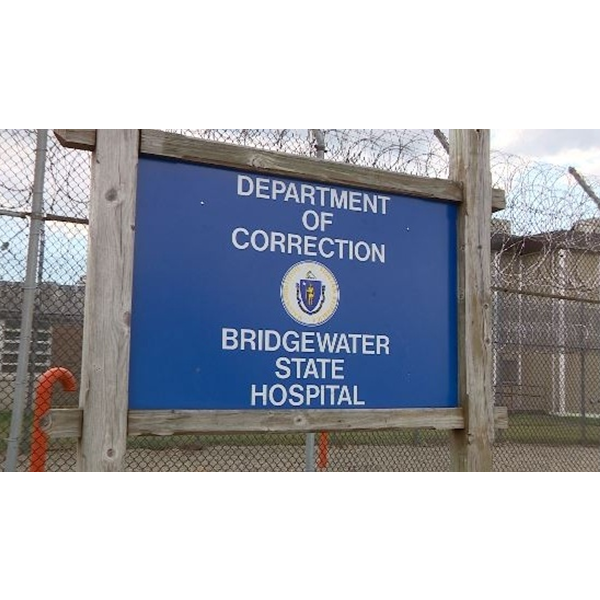
H.3291, An Act transferring Bridgewater State Hospital from the Department of Correction to the Department of Mental Health' moved from the House Substance Use, Mental Health & Recovery Committee to Senate Ways and Means in Decmeber, 2025. The Senate version (S.1386) followed suit in February, 2026.

Resources, articles, webinars & more!
Involuntary Outpatient Commitment

Involuntary Outpatient Commitment is better known in the US as "Assisted Outpatient Treatment" or "AOT" and in many other countries at "Community Treatment Orders". However, only the language of "Involuntary Outpatient Commitment" (IOC) speaks directly to the psychiatric force involved.

IOC is different than inpatient commitment. Inpatient psychiatric commitment refers only to the time during which a person is confined to a locked psychiatric unit by court order. IOC, on the other hand, follows a person home and uses a court order to require them to follow treatment orders including (but not limited to) taking prescribed drugs even in the privacy of their own space. If someone refuses to follows these orders, they can be dragged back into court or picked up by the police and brought directly to a psychiatric facility (depending on the state and the particular law).

All US states and territories have some form of IOC written into law except for Massachusetts and Connecticut.

Articles
6 Fundamental Rights

The 6 Fundamental Rights started at the 5 Fundamental Rights, a law passed in 1998 in Massachusetts and applying to any program contracted, operated or licensed by the Massachusetts Department of Mental Health (DMH). The first 5 rights (in brief) included the right to make and receive confidential phone calls, the right to send and receive unopened, uncensored mail, the right to have visitors at a time that is sufficiently flexible to meet the needs of the visitor and person visited, the right to have visits from attorneys, legal advocates, clinicians, clergy and the right to a humane environment. The 6th Fundamental Right, passed in 2015, was the right to fresh air.

There is now a move to update these rights. For example, there is a move to have the 'mail' section include e-mail, to ensure peer supporters have the same access as clinicians and to include access to disability accommodations and culturally relevant supplies for BIPOC and trans people. This effort to update also includes an accountability process to hold providers accountable when they violate these rights. Violations are commonplace in many facilities, particularly inpatient units.


Peer Respites

Peer Respites are peer-run 24/7 crisis alternatives. People are offered a private bedroom, access to community spaces and peer support in a homelike environment. Stays typically range from 5 days to 2 weeks. There are approximately four-dozen peer respites in the United States, though it is hard to track based on spaces opening and closing, as well as challenges in establishing which spaces meet the fidelity of a peer respite and which may be a different type of alternative. The most complete listing that we are aware of is kept by the National Empowerment Center.

Articles
Bridgewater State Hospital

Bridgewater State Hospital is based in Bridgewater Massachusetts. It is the only facility managed by the Department of Corrections that is focused on housing people labeled with serious mental illness. It is often referred to as a "prison-hospital hybrid". It has been used as a facility for people in a variety of situations including those on civil commitment (including Section 35s, people held for substance use) and people being detained pre-trial.

It has faced heavy scrutiny for bad conditions and abusive treatment going back decades. The film "Titicut Follies" was made in 1967 about daily life at the prison.