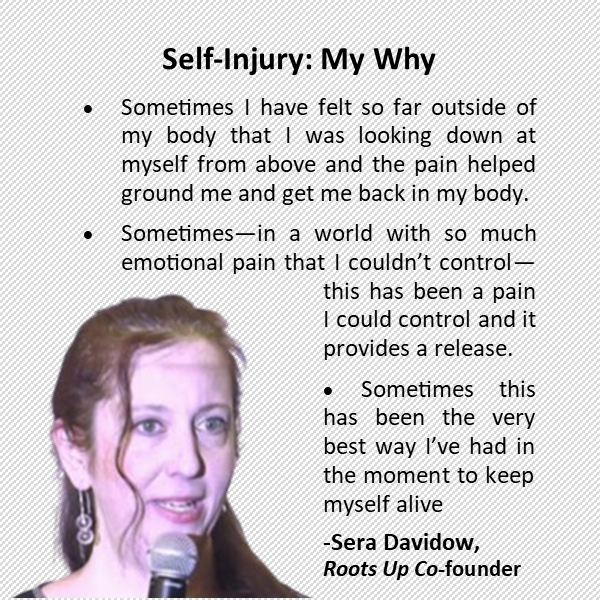
Self-Injury: My Why
Project Why invites people to share their experiences of self-injury openly and without shame. The point is not to claim that self-injury is “good”, but nor is our aim to suggest that self-injury is “bad”. Rather, it is to encourage acceptance of self-injury as one of many adaptations that people make on their path to survival and to create space for each individual to determine what it means in their life. For some of us, self-injury has always posed significant risks that could easily spin out of control. For others of us, it worked for a time and then stopped working and so we chose to find ways to move on to other things. And for still others, self-injury will always be a part of our lives and many of us are okay with that.
This project also challenges people to broaden their view of what ‘self-injury’ even is. It invites people to broaden their understanding by recognizing that many socially accepted behaviors can also function as forms of self-injury. In fact, many of us have experienced first-hand the ways in which we’ve been accepted or even rewarded for our socially acceptable forms of self-injury (heavy drinking, overeating or overworking in intentionally self-destructive ways, over exercising, etc.) while being punished for those forms that are not so socially accepted (cutting, burning, etc.). This has been true even when the socially acceptable forms that people are ignoring or rewarding pose much greater risk to our well-being. These experiences have led many of us to wonder how often objections to self-injury are shaped by other people’s discomfort and fears rather than by careful attention to the actual risks and impact on our lives.
This disconnect and misunderstanding of our experiences sometimes comes at great expense. Self-injury has been used as justification to forcibly contain us in psychiatric facilities, to challenge our ability to parent or hold a job, and has even led to violent and sometimes deadly police interactions initiated by people who said they were concerned for our “safety”. This has understandably led to our own valid fears about talking about self-injury. But silence and fear don’t lead to healing and connection.
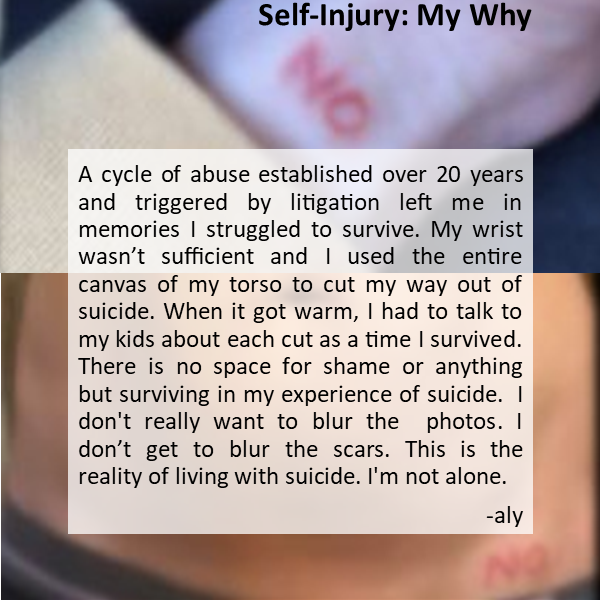
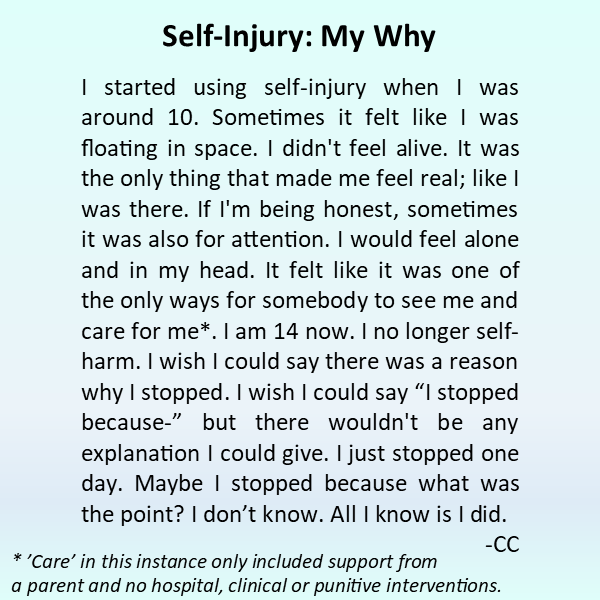
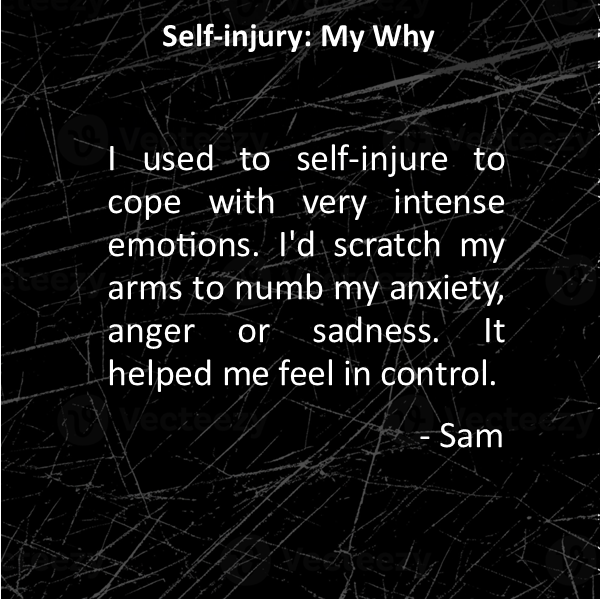
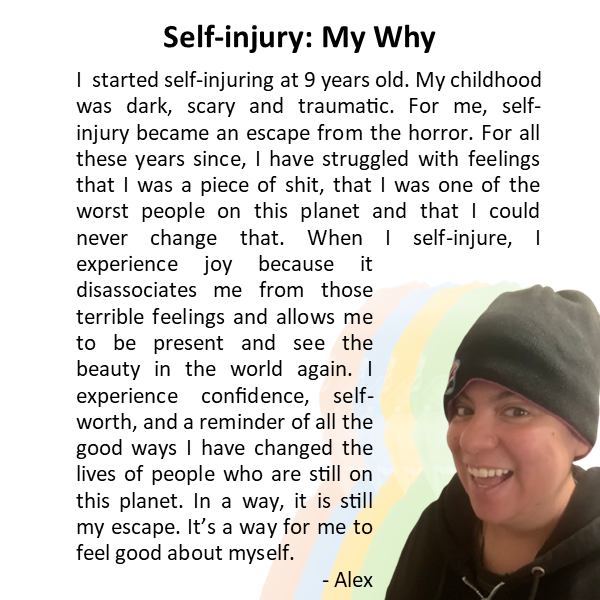
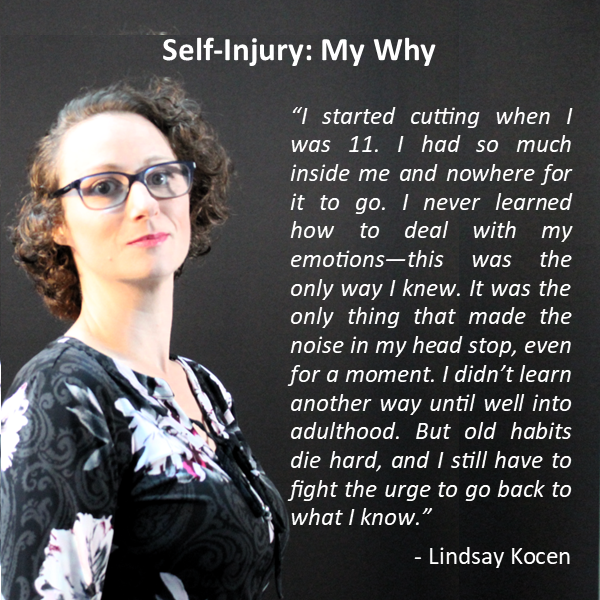
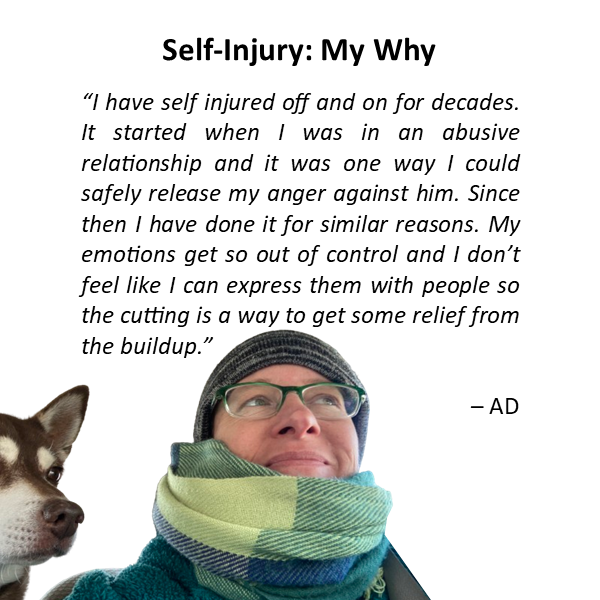
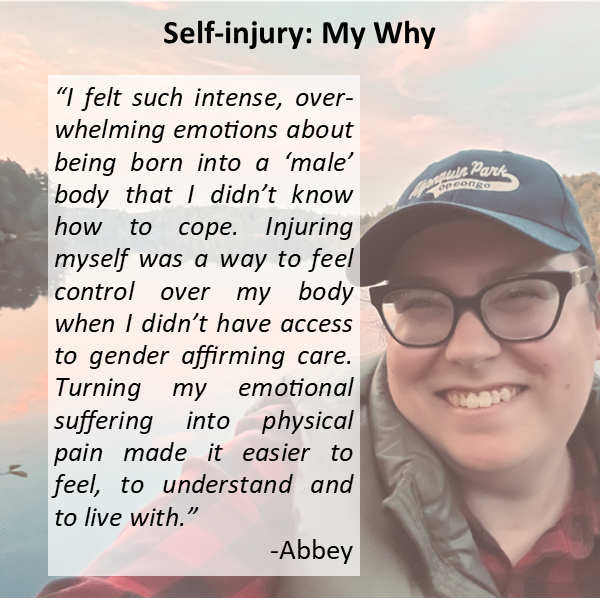
And so we offer this growing gallery of ‘whys’ to:
- Build understanding of why people self-injure and the many ways it has helped some of us survive at different points in our lives.
- Help people who use or have used self-injury feel less alone, even if fear of judgment or negative consequences has kept them silent until now.
- Remind the world that self-injury is often not the problem itself, but one way some of us have navigated our problems—and that simply forcing us to stop cannot be the answer.
Resources
Articles:
Books
Website
- Alternatives to Self-injury (Project LETS)
Videos
Gallery of Whys